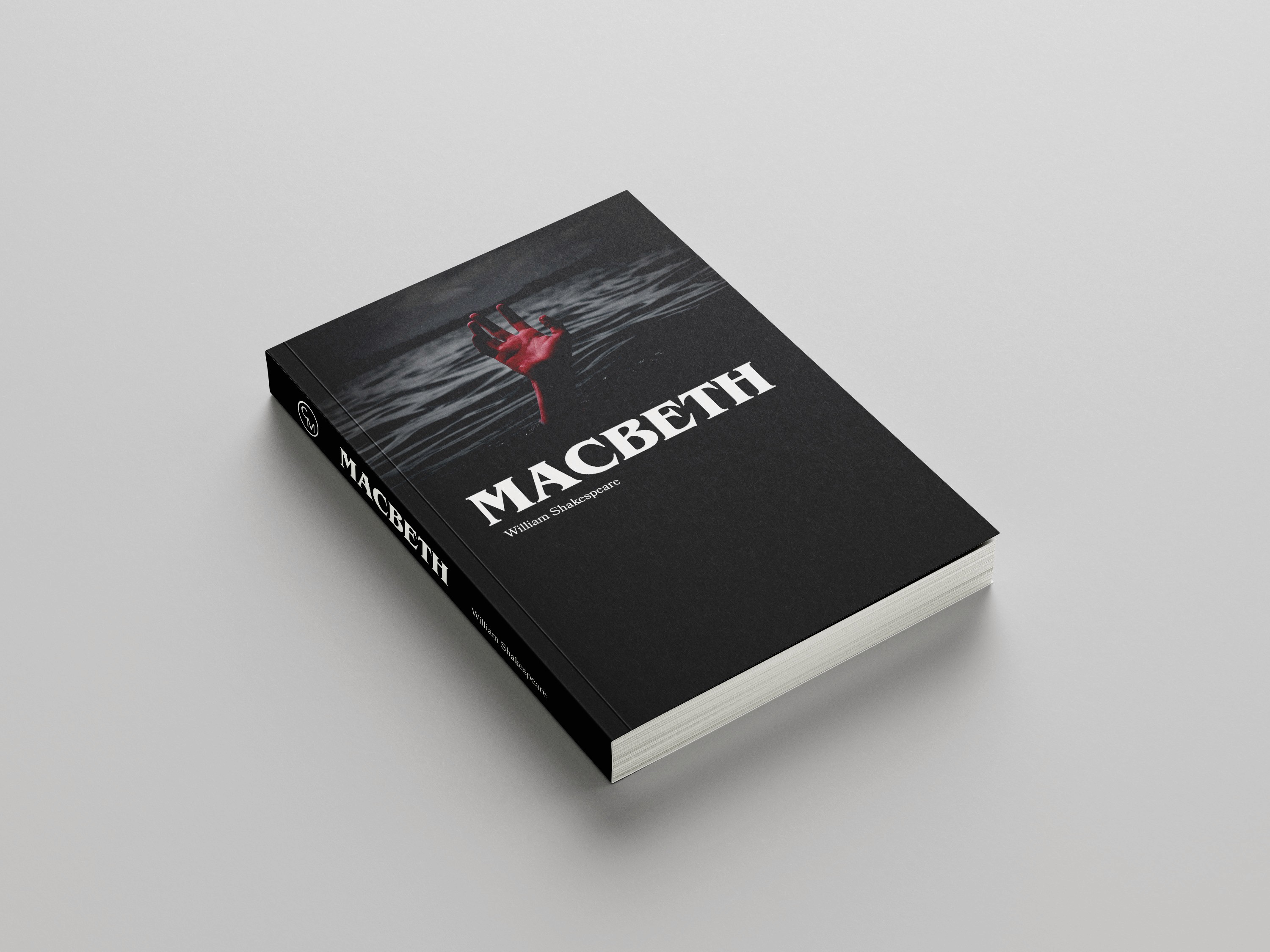
Designing for a classic like Macbeth presents the challenge of avoiding clichés while still honoring the story’s dark, psychological weight. Many existing covers lean on predictable tropes, which can make them feel uninspired. As a student, I was also facing my own learning curve: figuring out how to manipulate imagery conceptually while keeping it functional within a book design system. This project pushed me to bridge the gap between traditional artistic instincts and digital design execution.
After revisiting Shakespeare’s text, I pulled out key themes of guilt, violence, and the haunting weight of Macbeth’s ambition. My solution was to create a surreal dustjacket design featuring a blood-soaked hand reaching outward—symbolizing Macbeth drowning in his own guilt and desperation. Through digital photo manipulation and editing, I combined symbolic imagery with typographic treatment to capture the intensity of the play in a fresh, conceptual way.
Project Photos
I designed a full dustjacket system including the front cover, spine, back cover, and inside flaps. The aesthetic balanced bold typography with dark, surreal imagery, allowing the concept to feel both visually striking and functionally suited to a physical book format. The outcome was a cohesive, modern reinterpretation of Macbeth’s identity that leaned into conceptual storytelling rather than literal illustration.
This was one of my first computer graphics projects and a major step in transitioning my creativity from traditional mediums into digital design. I learned how to use photo manipulation as a tool for conceptual storytelling, how to combine symbolism with functional book design, and how to carry a visual theme across an entire dustjacket system. Most importantly, I realized how digital tools can expand the boundaries of conceptual thinking—turning raw creative ideas into professional, print-ready design work.